
So what is Vibe Coding anyway?? Vibe coding is an AI-assisted coding approach where you describe what you want in natural language (i.e., the way you would talk to a friend), and an AI generates code for you. Similar to pair programming, which involves two humans collaborating closely on code, “vibe coding” uses an AI…
Category: Tools & Tips
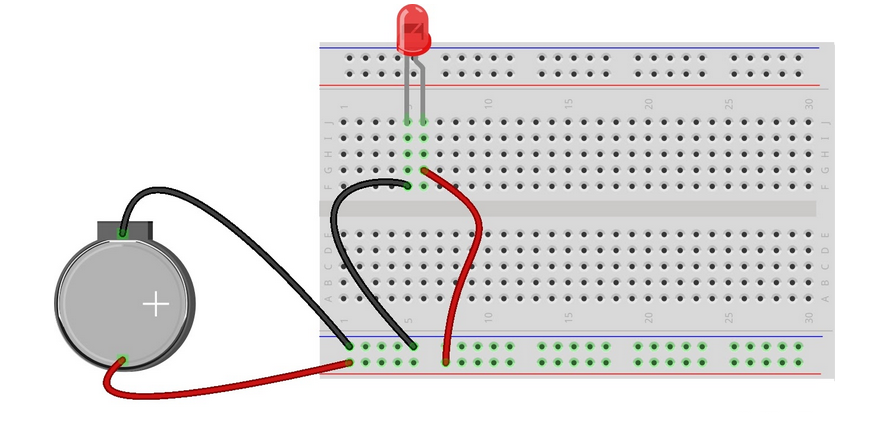
How to use a Breadboard!
Used by hobbyists and professional engineers alike, breadboards allow us to quickly build all sorts of circuits! Breadboards got their name because in a time long ago, engineers used to use wooden cutting boards! They would hammer in nails and wrap wires to make connections. Not only was it tedious, but the cooks got frustrated…

A Beginner’s Guide to Microcontrollers
What do remote controllers, routers, and robots all have in common? Microcontrollers! These days, beginner-friendly microcontrollers are easy to build with and program using just a laptop, a USB cable, and some (free) open-source software. The catch? There are like, 4324302* different microcontrollers and it can be daunting to get started, especially if you’re just…

Intro to the (Headless) Raspberry Pi!
Finally! Use your Raspberry Pi without spending what feels like forever connecting external peripherals and dealing w/ a cable monstrosity: Configure your Pi to be headless! (not the scary kind tho) This is particularly helpful for folks teaching workshops with the Raspberry Pi, since it can be cumbersome (and expensive) to provide monitors, keyboards, and…

Renewable Energy Technology: What is it and How to Use it!
Now more than ever, folks like you and me have to step up and take a stand to protect and preserve our environment (and, quite honestly, our species). One great way to do that is to incorporate renewable energy technology into projects that use electricity. Even if the environmental aspect isn’t enough to get you…

How to Use (and Choose) a Multimeter!
Checking your car battery life, debugging circuits, and finding that pesky short are all super useful functions that can be performed with just one awesome tool: the multimeter! First of all, what the heck is a multimeter?? Excellent setup question! It’s a handheld device with bunch of different electrical meters — hence, multi-meter! Measuring voltage,…

Using an Oscilloscope!
Visualize all those mysterious electronic signals with an oscilloscope! Learn how to build and use a super simple $30 oscilloscope perfect for electronics hobbyist applications. It’s also a great way to get started using some of the fancier oscilloscopes! Reading and Changing the Oscilloscope Display Every oscilloscope has a window that displays the voltage output…

Portable Solar USB Charger
Portable USB chargers are incredibly useful for adventures in the great outdoors, festivals, traveling, or if you are out-and-about all day. Adding in a solar panel provides an additional source of portable power useable (nearly) everywhere. The whole project can be built for ~ $20, even if you don’t have a soldering iron! Parts 1.5W…

Blinking Light(s) with the Raspberry Pi!
Welcome to the wonderful world of controlling physical objects with software! This tutorial is a complete beginners introduction to the Raspberry Pi computer, covering the basic features and functions to help you bring your ideas to life! Blinking a light using the Raspberry Pi’s General Purpose Input and Output (“GPIO”) pins is the hardware equivalent…

Setting up a Raspberry Pi to Control Physical Objects, Pt. 2
What cool things can you do with the Raspberry Pi? Welcome back to exploring the Raspberry Pi! There are tons of awesome things you can do with the Raspberry Pi — (pretty much) everything that you would do on a normal computer, like word processing, surfing the internet, streaming videos, etc. You can write programs…